In preparation for a couple of groups I have had
another go at ways of making traditional paste papers.


I also researched on the internet and found an interesting Martha Stewart video with the book binder Sage Reynolds; his recipe for the paste is slightly more complicated using alum and acrylic varnish. I would say the main tip is to do your best to get rid of lumps; in Sage Reynolds method the paper is brushed over completely with the paste before mark making and this really shows up the stray lumps, as he had the patience to strain his paste first he probably got rid of them


Certainly next time I will take far more
care to do away with the lumps. A link to historical examples of paste papers
used in book binding is on the University of Washington site.


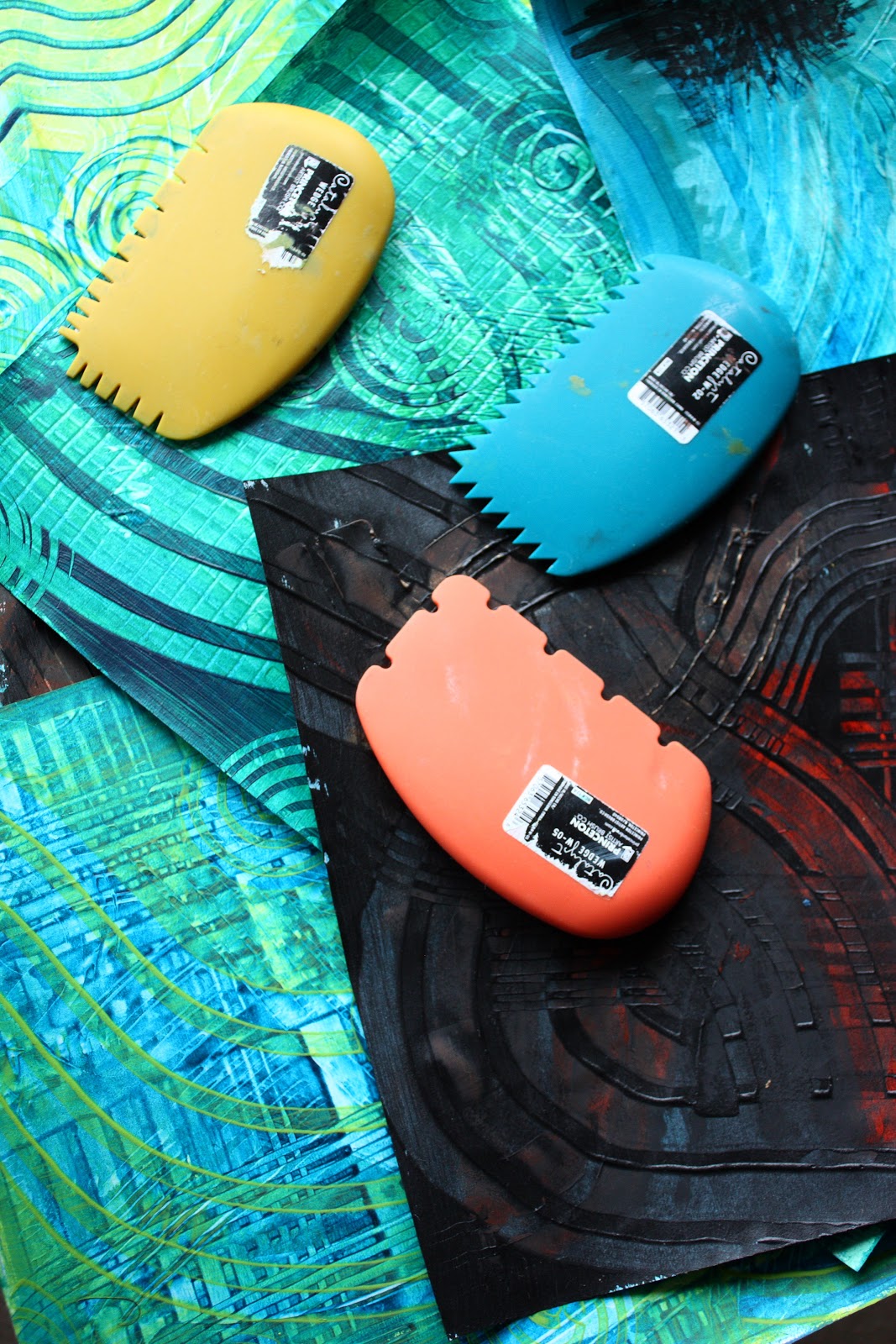
I tried stamping into the paste, but did not find
that as satisfying, but it could be appropriate to a particular theme. Making these papers is quite addictive,so have plenty of paper and space ready.
The fascinating thing is how the paper dries sucking the paste in and leaving three dimensional marks.
The fascinating thing is how the paper dries sucking the paste in and leaving three dimensional marks.
I read a book which mentions printing over acrylic papers and I had to have a go just for
the heck of it. My trusty printer coped well as I held my breath.


I made a layer on the computer and printed the pebbles out onto the paste paper.

If you would like to see some intricate paste papers
and examples of beautiful folded books you can find them here on Anna Mavromatis' blog.